Here We Go!
This one is about a title I’ve finally tracked down — the UK first pressing CD of Never Mind the Bollocks (CDV 2086).
The UK and EU CD pressings of Never Mind the Bollocks (CDV 2086 / CDVX 2086) present a few puzzles on Discogs. The release years listed alongside catalogue numbers don’t always match actual manufacturing dates — sometimes the gap is considerable.
Part of the problem is that the same catalogue number was used across an unusually long period, while the sleeve design and pressing plants changed more than once. Sorting by “year registered” on Discogs gives a misleading picture.
For this article, I’ve pulled the Discogs data via API and cross-referenced it against physical evidence:
- Sleeve design
- Barcode presence
- Jewel case type
- Inner ring matrix engraving
- IFPI code
- Pressing plant
Using these observable physical facts, I’ve put together an objective timeline and a practical guide to identifying each generation.
- 1. Timeline and Specifications Based on Physical Evidence
- ① Earliest Pressing (Specification A: No Barcode)
- ② Earliest Pressing (Specification B: Transitional – Barcode Added)
- ③ Mid-Period Pressing (1992–mid-1990s: Transition to UK Manufacturing)
- ④ Mid-Period Pressing (Late 1990s onwards: Transition to Netherlands Manufacturing)
- ⑤ Later Pressing (Budget Reissue: Late 1990s–Early 2000s)
- ⑥ Later Pressing (Reissue: 2009–2011)
- 2. Physical Examination of the Jewel Case
- 3. Why Discogs Registered Years Often Diverge from Actual History
- 4. Key Pressing Plants – Characteristics and Manufacturing Period
- 5. Conclusion – Six Criteria for Identifying the Earliest Pressing (Specification A)
- A Note on the West German SONOPRESS Pressing
1. Timeline and Specifications Based on Physical Evidence
Cross-referencing Discogs entries with sleeve variants and matrix engravings, I’ve identified six distinct generations of this title.
① Earliest Pressing (Specification A: No Barcode)
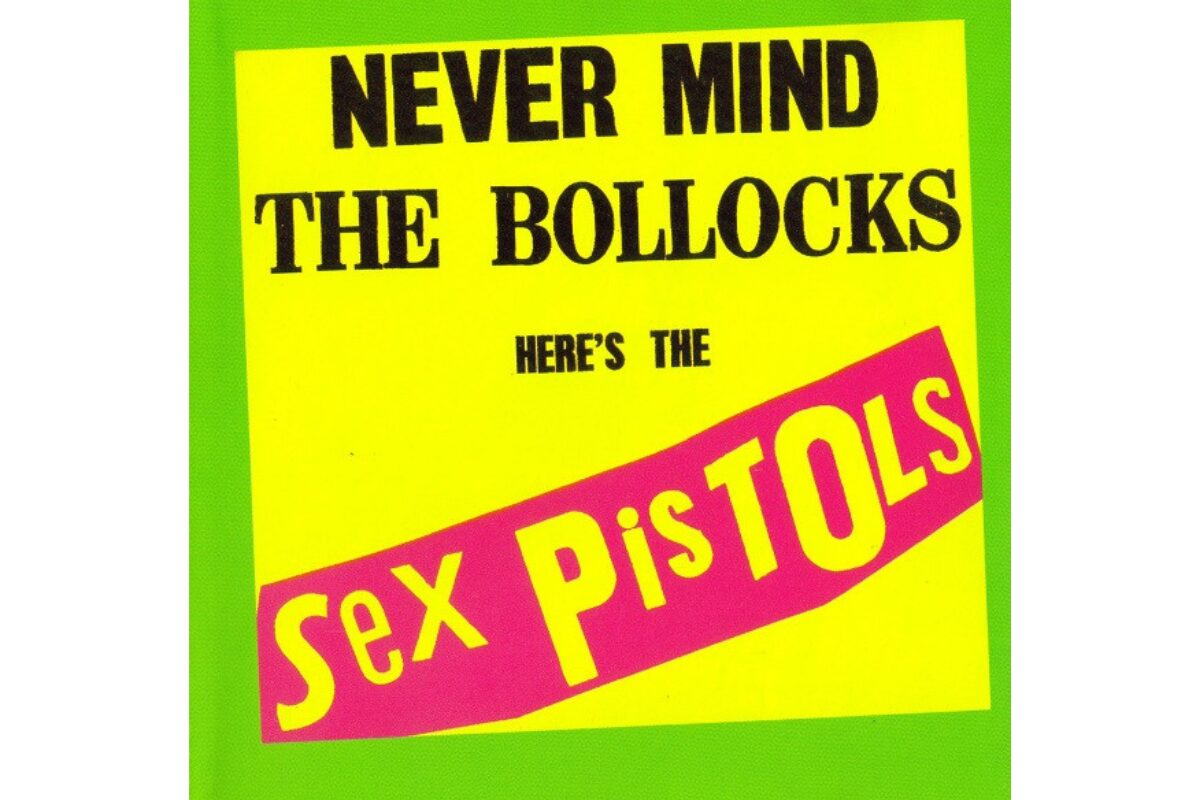
The very first CD pressing of Never Mind the Bollocks released in the UK. No “X” suffix on the catalogue number. Both front and back sleeve artwork differs from the standard yellow-and-pink design seen on later pressings.
Catalogue number: CDV 2086
Discogs Release ID: r2002954
Sleeve: Green border on front / green background on back (©1985 credit) / no barcode
Matrix engraving: CDV 2086 : MASTERED BY NIMBUS (Variants 1–4 exist, differing in dot and colon style)
Pressing plant: Nimbus (UK)
IFPI code: None
💡 What is an IFPI code (SID code)?
The IFPI code (Source Identification code) is a plant identifier stamped onto CDs to combat counterfeiting and identify the manufacturing source. From 1994 onwards, pressing plants worldwide were required to include it. Any CD carrying an IFPI code was therefore manufactured in 1994 at the earliest.
② Earliest Pressing (Specification B: Transitional – Barcode Added)
Same “green border” sleeve artwork as Specification A, but with a barcode added to the back — presumably for distribution purposes. The disc itself uses the same original glass master as Specification A.
Catalogue number: CDV 2086
Discogs Release IDs: r390681 / r4422014 (Note: incorrectly registered as “1985” on Discogs — more on this below)
Sleeve: Green border on front / green background on back (©1985 credit) / barcode present
Matrix engraving: CDV 2086 : 1:2 MASTERED BY NIMBUS, etc.
Pressing plant: Nimbus (UK)
IFPI code: None
③ Mid-Period Pressing (1992–mid-1990s: Transition to UK Manufacturing)
Pressed after Virgin Records came under EMI’s ownership in 1992. From this generation onwards, the sleeve design changes to the standard “yellow and pink, no green border” artwork, with the back moving to a pink background featuring a collage of track titles.
Catalogue number: CDV 2086
Discogs Release IDs: r4590626 / r12563872 / r13477431 / r14199498
Sleeve: Standard design (yellow × pink, no green border) / barcode present
Matrix engraving: 786320 . 1 EMI SWINDON
Pressing plant: EMI Swindon (UK)
IFPI code: Absent on early pressings / present on later pressings
④ Mid-Period Pressing (Late 1990s onwards: Transition to Netherlands Manufacturing)
Still carrying the CDV 2086 catalogue number, but manufacturing shifted to EMI’s own plant in the Netherlands to consolidate EU-wide distribution.
Catalogue number: CDV 2086
Discogs Release IDs: r4556151 / r2119599 / r6237153 / r27123147
Sleeve: Standard design (yellow × pink, no green border) / barcode present
Matrix engraving: 786320 @ 3 2-1-16-NL (the “-NL” suffix denoting Netherlands manufacture)
Pressing plant: EMI Uden (Netherlands)
IFPI code: Present
⑤ Later Pressing (Budget Reissue: Late 1990s–Early 2000s)
Mid-price and remastered reissue series. From this generation onwards, the catalogue number gains an “X” suffix, and the base matrix number changes from 786320 to 787877.
Catalogue number: CDVX 2086 (or CDVX2086)
Discogs Release IDs: r726157 / r15262952 / r12358479 / r7490684 / r3501272 / r14807266
Sleeve: Standard design / “X” added to catalogue number / barcode present
Matrix engraving: 787877 2 . 1 EMI SWINDON 1-1-22-NL (base number changed to 787877)
Pressing plant: EMI Swindon (glass master) / EMI Uden (pressing)
IFPI code: Present
⑥ Later Pressing (Reissue: 2009–2011)
More recent pressings from the late 2000s onwards. The catalogue number and sleeve follow the preceding CDVX 2086 generation, but manufacturing was contracted out to a plant in Eastern Europe.
Catalogue number: CDVX 2086
Discogs Release IDs: r4726996 / r11169346
Sleeve: Standard design / “X” in catalogue number / barcode present
Matrix engraving: [GZ logo] X40571 7878772-CD or V50547
Pressing plant: GZ Digital Media (Czech Republic)
IFPI code: Present
2. Physical Examination of the Jewel Case
When trying to identify the earliest pressings (Specifications A and B), the jewel case itself can offer a few supplementary clues — though they need to be handled with care.
Smooth-sided case: Early CD jewel cases had smooth, unribbed edges — no grip ridges along the top and bottom. This case style is characteristic of the early CD era.
“Patent Pending” moulding: Some early cases have “Patent Pending” or a patent number moulded into the plastic of the case back or tray.
⚠️ A note on jewel case condition
The jewel case is the part most likely to have been replaced over the years — through cracking, damage, or simple wear. A standard later-type case (ribbed edges, common from the 1990s onwards) does not automatically mean a later pressing.
The correct way to read this: if a smooth-sided case with a Patent Pending moulding is present and appears original, it suggests the case has never been swapped out — which marginally strengthens the case for an early pressing. Treat it as supporting evidence, not proof in itself.
3. Why Discogs Registered Years Often Diverge from Actual History
Sorting by year on Discogs produces a timeline that doesn’t always reflect the actual manufacturing sequence. Based on the data I’ve pulled, there are three main reasons for this.
The “1985 Pressing” Trap (Copyright Year Misread as Release Year)
Some Discogs entries — r4422014, r390681, and similar — are registered as “released 1985,” placing them at the top of any date-sorted search. On closer examination, the matrix markings confirm Nimbus manufacture, consistent with the earliest pressings, but the year appears to have been entered by users who read the “©1985” copyright credit printed on the sleeve as a release year. That copyright date was carried over from the very first pressing and appears on subsequent variants as well. Not the most reliable data entry.
The Return of “CDVX” via Reissue Design
The 2009 and 2011 reissues (r4726996, r11169346) are based on the CDVX 2086 mid-price design established in the late 1990s. The same catalogue number reappearing a decade later creates an apparent anomaly — the same number turns up near the start of the timeline (when the format was first introduced) and again at the far end (on the reissues).
Catalogue Number Reuse and Pressing Plant Changes
Under the single catalogue number CDV 2086, manufacturing passed through four distinct plants:
→ Nimbus (1980s)
→ EMI Swindon (from 1992)
→ EMI Uden (from the late 1990s)
→ GZ Digital Media (from the mid-2000s)
A number of Discogs entries covering these transitions remain registered without a year (“Unknown”), which throws off any attempt to sort chronologically.
Supplementary Note: Asian Market Pressings
Among CDV 2086 entries, the data also flags at least one specialist pressing for Asian distribution. Discogs release r2428744 carries the matrix engraving PAN ASIA CDV-2086 [A] 2, confirming a distinct commissioned pressing for that market.
4. Key Pressing Plants – Characteristics and Manufacturing Period
The plant name or code engraved in the inner ring (matrix area) of the disc is the most reliable way to identify when and where a copy was made.
Nimbus
- Country: UK
- Example engraving: MASTERED BY NIMBUS (thin, lightly engraved style)
- Notes: One of the leading early CD pressing plants in the UK. Nimbus handled Virgin’s early CD manufacturing, and their engraving appears on the earliest pressings of this title — CDV 2086, green border sleeve, no barcode.
MPO
- Country: France
- Example engraving: MPO 01 @@
- Notes: France’s largest independent pressing plant. Likely brought in by Virgin to handle demand when UK CD manufacturing capacity was stretched in the late 1980s. Some collectors place MPO pressings alongside Nimbus as early-era copies, though their precise relationship to the initial UK release hasn’t been confirmed with physical evidence. At a guess — and it is only a guess — they may represent a parallel pressing rather than a true first pressing.
EMI Swindon
- Country: UK
- Example engraving: EMI SWINDON (bold dot-matrix style font)
- Notes: EMI’s main UK CD pressing facility after the Virgin acquisition in 1992. On this title, Swindon pressings appear from the standard yellow-and-pink sleeve generation onwards. Early Swindon pressings carry no IFPI code; later ones do.
EMI Uden
- Country: Netherlands
- Example engraving: EMI 7878772 / MANUFACTURED BY EMI UDEN
- Notes: EMI’s principal European pressing plant, based in Uden. From the late 1990s, EU-wide distribution of this title shifted from the UK to the Netherlands. Common on the early CDVX 2086 budget reissues; always carries an IFPI code.
GZ Digital Media
- Country: Czech Republic
- Example engraving: GZ Digital Media, or a numeric code (e.g. V50547)
- Notes: One of Europe’s largest pressing operations. Responsible for a significant volume of European CD and LP reissues from the 2000s onwards. On this title, GZ matrix engravings appear on the 2009–2011 CDVX 2086 reissues.
5. Conclusion – Six Criteria for Identifying the Earliest Pressing (Specification A)
Drawing together the physical evidence, the earliest pressing (Specification A) can be identified by six criteria:
1.The front sleeve has a wide green border — distinct from the standard later design.

2.The back sleeve has a green background — again, distinct from the standard later version.

3.The back sleeve carries no barcode whatsoever.
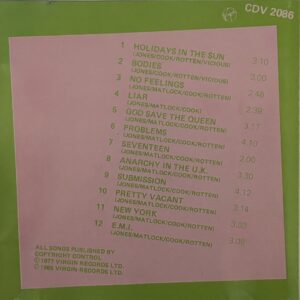
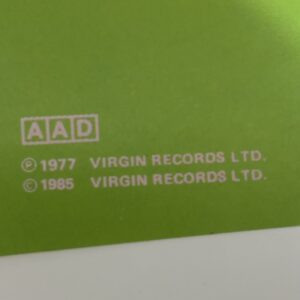
4.The copyright credit on the back reads © 1985 VIRGIN RECORDS LTD.
5.The catalogue number on both sleeve and disc is CDV 2086 — no “X”.
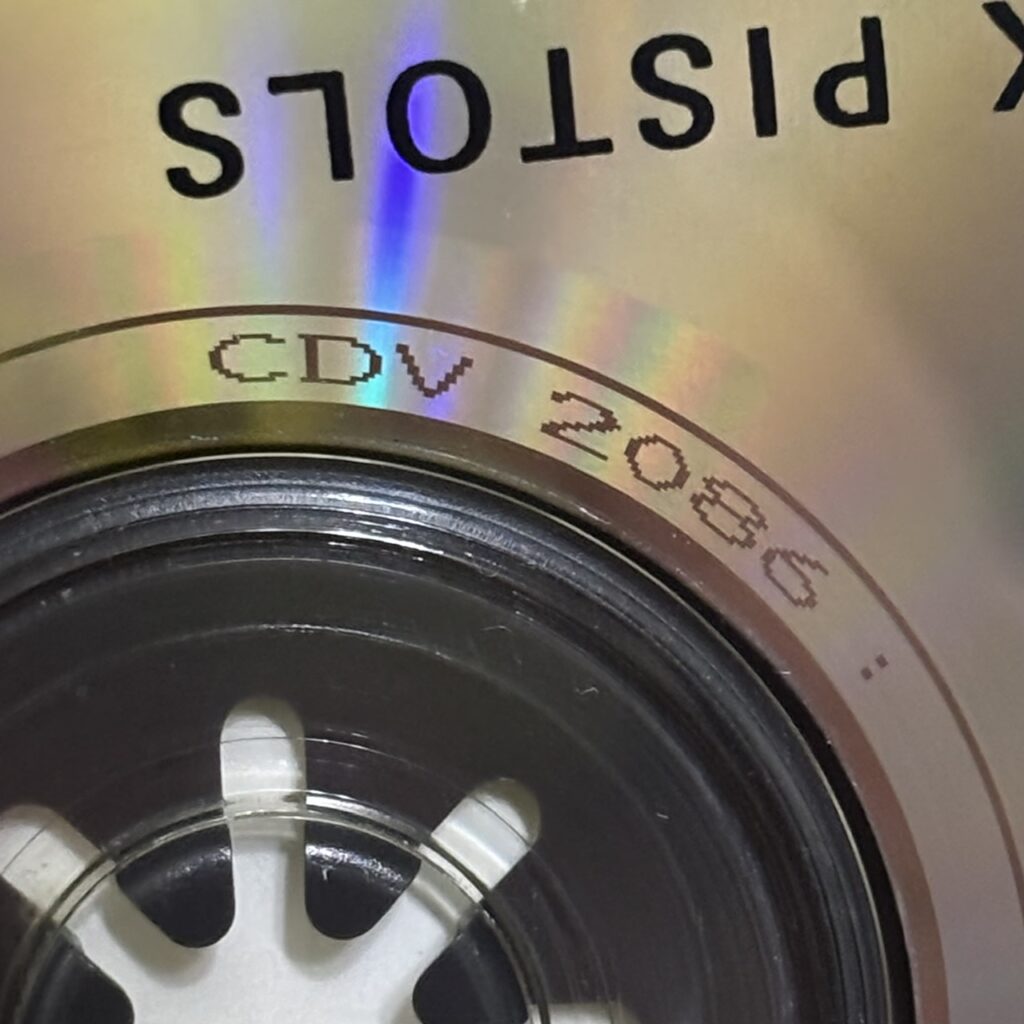
6.The inner ring matrix engraving reads MASTERED BY NIMBUS, with no IFPI code anywhere on the disc.
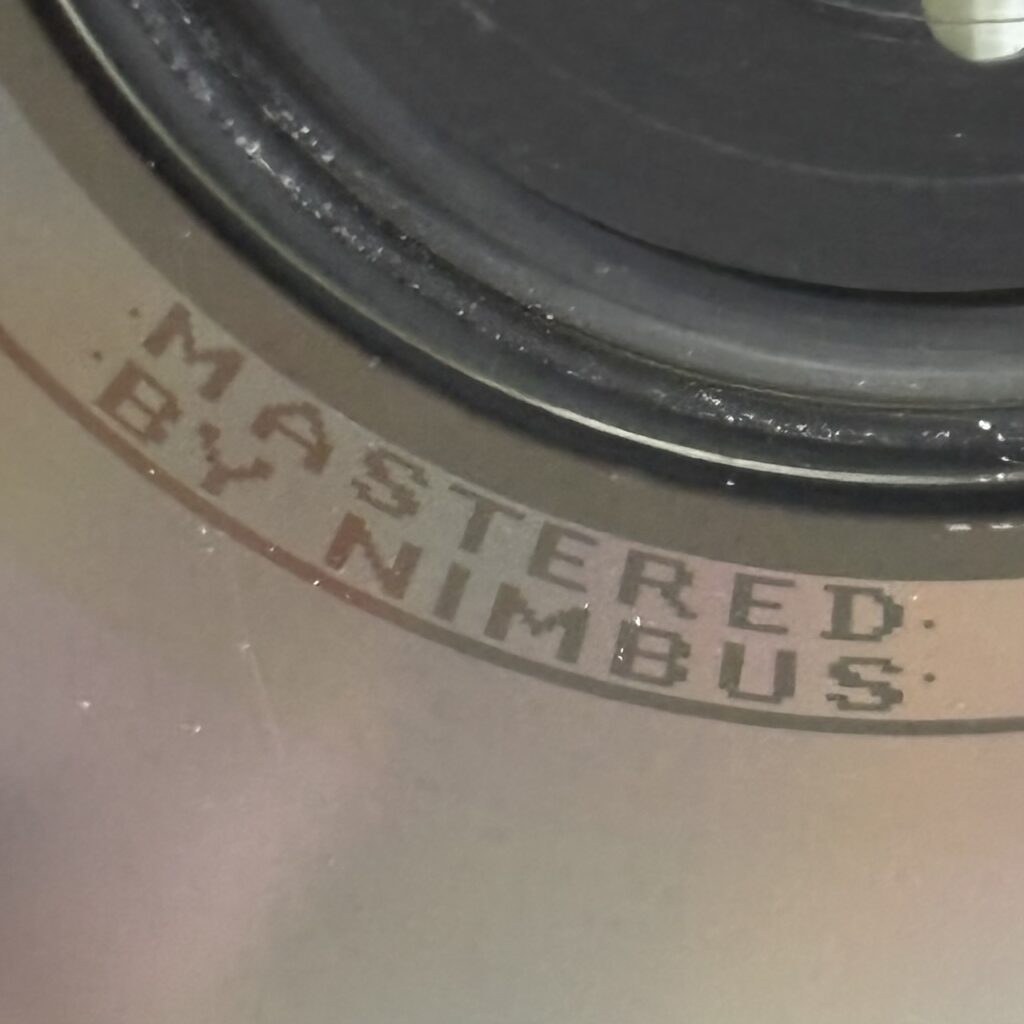
The year shown on Discogs is worth checking, but it shouldn’t be the deciding factor. These six physical criteria are what actually distinguish the earliest pressing from everything that came after.
A Note on the West German SONOPRESS Pressing
A reader, rubbishflower, left a comment mentioning that an early West German pressing of CDV 2086 also exists — stamped SONOPRESS. I’ve looked into it on Discogs and noted down what I found below. I don’t have a copy myself, so treat this as background reading rather than a verified entry.
Discogs data:
– Catalogue number: CDV 2086 (no “X”)
– Matrix: SONOPRESS CDV 2086 E
– Manufactured and printed in West Germany
– No barcode
– ©1985 Virgin Records Ltd. credit
– Format listed on Discogs as “Reissue”
Trying to place this against the framework above raises a few points worth noting.
CDV catalogue number, but no barcode
In generation ③ (EMI Swindon era), the CDV catalogue number comes with a “0777-” barcode. This SONOPRESS pressing has no barcode at all. That said, Virgin’s earliest releases generally went out without barcodes — these only appeared on later pressings. So “CDV with no barcode” arguably points towards an early pressing rather than away from one.
The ©1985 credit, again
Same pattern as the “1985 trap” discussed earlier: ©1985 isn’t a release year. But combined with the absence of a barcode and this catalogue number, an early pressing seems plausible.
On the Discogs “Reissue” tag
Discogs lists this as a “Reissue”. Worth bearing in mind that LPs tend to get registered as “Original” by default, while CD pressings of the same recording often get tagged “Reissue” regardless of how early they actually are. So the tag on its own doesn’t settle anything.
UK or EU release — and which came first
There’s also a discussion in the Discogs comments about whether this should be catalogued as a UK release or an EU one, given it was manufactured in West Germany. Whether it predates or postdates the UK CDV 2086 (Nimbus) pressing isn’t clear either.
SONOPRESS
Country: Germany
Example engraving: SONOPRESS [matrix number] (e.g. SONOPRESS B-6577/CDV2086 B)
Notes: A major pressing plant under the Bertelsmann group. One of Europe’s leading early CD manufacturers, handling work for labels across the continent — including, it seems, Virgin’s early and mid-period CD pressings.
Summary (and this part is a guess)
The matrix is different, but the specification — no barcode, ©1985 credit — sits close to the earliest UK pressing (Specification A). For now, I’m treating this as a parallel variant from the same period rather than a later one.
If anyone has a copy in hand, I’d be glad to hear more.
byebye👋
For collectors interested in Japanese editions
If you are drawn to the design and information found on Japanese releases, particularly obi strips, you may want to take a look at my Never Mind The Bollocks Japanese CD OBI Gallery.
This page organises each obi strip variation issued for the album individually, presenting the obi itself as the main focus in a collector-oriented reference format.
It is intended as an entry point for those interested in Japanese obi strips.



コメント